Insights on AI in the Workplace #HuntsvilleAI

Stop Blaming AI for Problems That Were Already There
AI didn't create these problems, sheep have always existed. This may be controversial, but regulating AI without examining root causes doesn't fix anything If we spend all of our energy trying to regulate and restrict AI without examining the human values, institutional structures, and systemic inequities baked into the data it learns from, we’re only slowing down the symptom versus addressing the deeper problem.

Do It for the Algorithm!?!
What Will The Algorithm Reward? This is often the first question that pops in my head when I sit down to write for my blog or my next Linkedin post. Authenticity takes time and we’re all trying to figure out how to protect it.

COLORING OUTSIDE THE LINES - AI Didn't Kill Individuality, We’ve Been Doing That All On Our Own.
Coloring Outside the Lines🎨 The students who thrived in school were usually the ones who learned how to perform to the standard, color inside the lines, and learn in a way that aligned to the state curriculum. Organizations are no different. If we want AI that actually makes room for human variation, neurodivergence, cultural difference, and the full spectrum of human expression, we must: revisit what we've elevated as 'ideal' in our organizations

Ethical AI Is Harder Than It Looks
There’s A Great Deal Of Movement, Protest, Pushback, and Deep Research As It Relates To AI. 🗣️ The government is slow at every level. Innovation outpaces oversight. So what can we actually control? I'm also actively looking for research participants for my fellowship project on AI and human agency in the workplace. DM me if you're interested.

BUY NOW - PAY LATER! Before AI Can Solve Anything, Your Organization Has to Know What It's Actually Solving For
Organizations Are Buying AI Tools Without Clearly Understanding What Problem They Are Actually Solving? AI governance grounded in organizational development principles asks: • What is our vision and does AI serve it? • What do our people need to do their best work? • Who is most affected by this tool, and are their voices heard? Durable AI strategies start with people and purpose, not tech platforms.
ATTENTION LEADERS!!! They don’t need another training module or pep talk
Real democratization requires a human being who meets people where they are, no algorithm required.

There’s a Lot of People Trying to Sell You AI Solutions
Many vendors are eager to sell AI tools before they understand your strategy, culture, and real readiness for adoption. This post explains why “buying a tool” is not the same as achieving outcomes-and how a human-centered, organization-first approach prevents stalled rollouts, leaked data, and misaligned automation.
AI Readiness Starts in the Basement, Not the Living Room
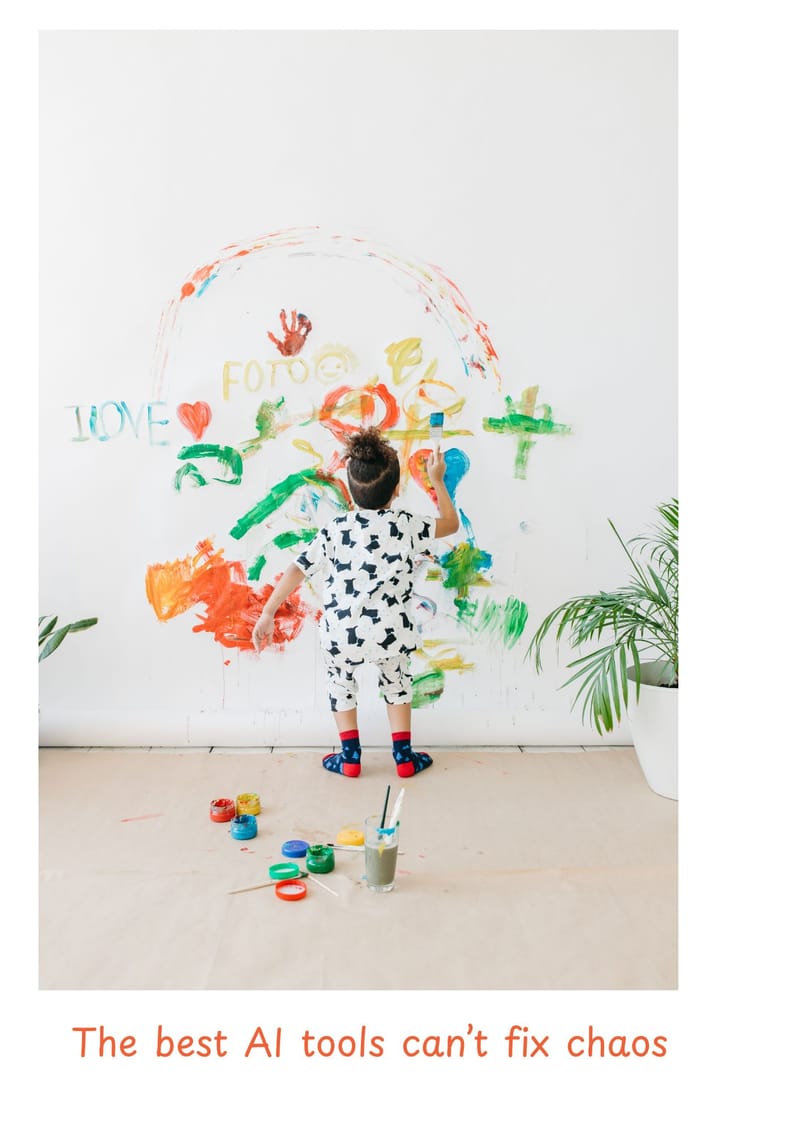
AI doesn't fix disorganization. It amplifies it. An undocumented, inconsistent process fed into an AI tool doesn't become efficient — it becomes inconsistent faster, at scale. True AI readiness has very little to do with technology selection.

AI-Powered Automation Assessment
Learn why change management often determines whether AI adoption succeeds or gets abandoned within months. Using the AI-Powered Automation Assessment as a case example, this post highlights the gaps that policies and governance documents can’t solve on their own-employee fear of job displacement, cultural readiness, psychological safety, and stakeholder trust. It provides a pragmatic view of how to pair governance with communication, training, and leadership behaviors that support sustainable adoption.